
What an ERP Consultant Actually Does in Nepal (and When You Need One)
9/11/2026 12:00:00 AM
150 Views
Here's something that surprises many Nepali business owners: the software itself is rarely the hard part of an ERP project.
The hard part is everything that comes before the software goes live. Figuring out how your business actually works not how you think it works, but how it really operates day to day. Cleaning up years of messy data. Getting departments that have never shared a system to agree on common processes.
That's what an ERP consultant does. And if you skip this part, you don't just waste money on software. You automate the mess.
The core job: turn your business processes into a working system
An ERP consultant sits between your business and the software. Their job is to understand how your company operates, then configure the ERP to match or improve those operations.
This is not the same as installing software and handing you a login. It's the difference between giving someone a car and teaching them to drive on Nepali roads.
Here's what the actual work looks like, step by step:
1. Discovery
The consultant interviews department heads, observes workflows, and documents how work currently flows through your business. Where do orders come from? How are they approved? How does inventory move? How do you file VAT returns? Where does data get entered twice?
2. Process mapping
Based on discovery, they create a map of your future-state workflows: how the business should operate inside the ERP. This is where inefficiencies get caught. Maybe your approval chain has five unnecessary steps. Maybe inventory adjustments happen informally with no audit trail.
3. Data clean-up and migration planning
Your current data customer records, product lists, opening balances, supplier details needs to move into the new system. But not all data deserves to move. A consultant helps decide what to migrate, what to clean, and what to leave behind.
4. Configuration and customization
The ERP is configured to match your mapped processes. Standard modules are activated. Nepal-specific requirements VAT rules, IRD report formats, multicurrency handling, and banking integrations are set up.
5. Testing
Before go-live, the consultant runs your actual business scenarios through the system. Can you raise a purchase order, receive goods, generate an invoice, and reconcile payment without any errors? If not, they fix it now, not after launch.
6. Training
Your staff needs to know how to use the system. Not just which buttons to click, but why the workflow matters. Good consultants train people on the process, not just the screen.
7. Go-live support
The first 2–4 weeks after launch are critical. The consultant is available to troubleshoot, adjust configurations, and make sure nothing breaks under real business pressure.
Signs you need a consultant, or just software
Some businesses genuinely can handle ERP on their own. Small teams with simple operations and a tech-savvy founder can sometimes self-implement.
But here are the signals that you need professional implementation help:
-
You're running more than one branch or location. Multisite setups need unified processes and data structures from day one.
-
Your current processes are informal or inconsistent. If different staff handle the same task in different ways, you need someone to standardize before the software can work.
-
You have significant data to migrate. Years of customer records, inventory data, and financial history can't be uploaded carelessly. Bad data in means bad data out permanently.
-
Compliance is complex. If you deal with VAT, customs, IRD, or Nepal Rastra Bank reporting, you need someone who has configured these requirements before.
-
Multiple departments need to go live simultaneously. Finance, inventory, sales, and procurement all going live together requires orchestration.
-
You've tried implementing software before, and it failed. That failure almost certainly wasn't about the software. It was about the process.
If three or more of these apply, the question is not whether to hire a consultant. It's which one.
Vendor-led consulting vs. independent consulting
This is an important distinction, and it's worth being transparent about.
Vendor-led consulting means the company that built (or sells) the software also implements it. The advantage is product expertise; they know the system deeply and can configure it faster. The potential concern is that they may not recommend against their own product, even when it's not the best fit.
Independent consulting means an outside expert evaluates your needs and may recommend different platforms. The advantage is neutrality. The potential downside is that they may lack the depth of product-specific knowledge to configure efficiently.
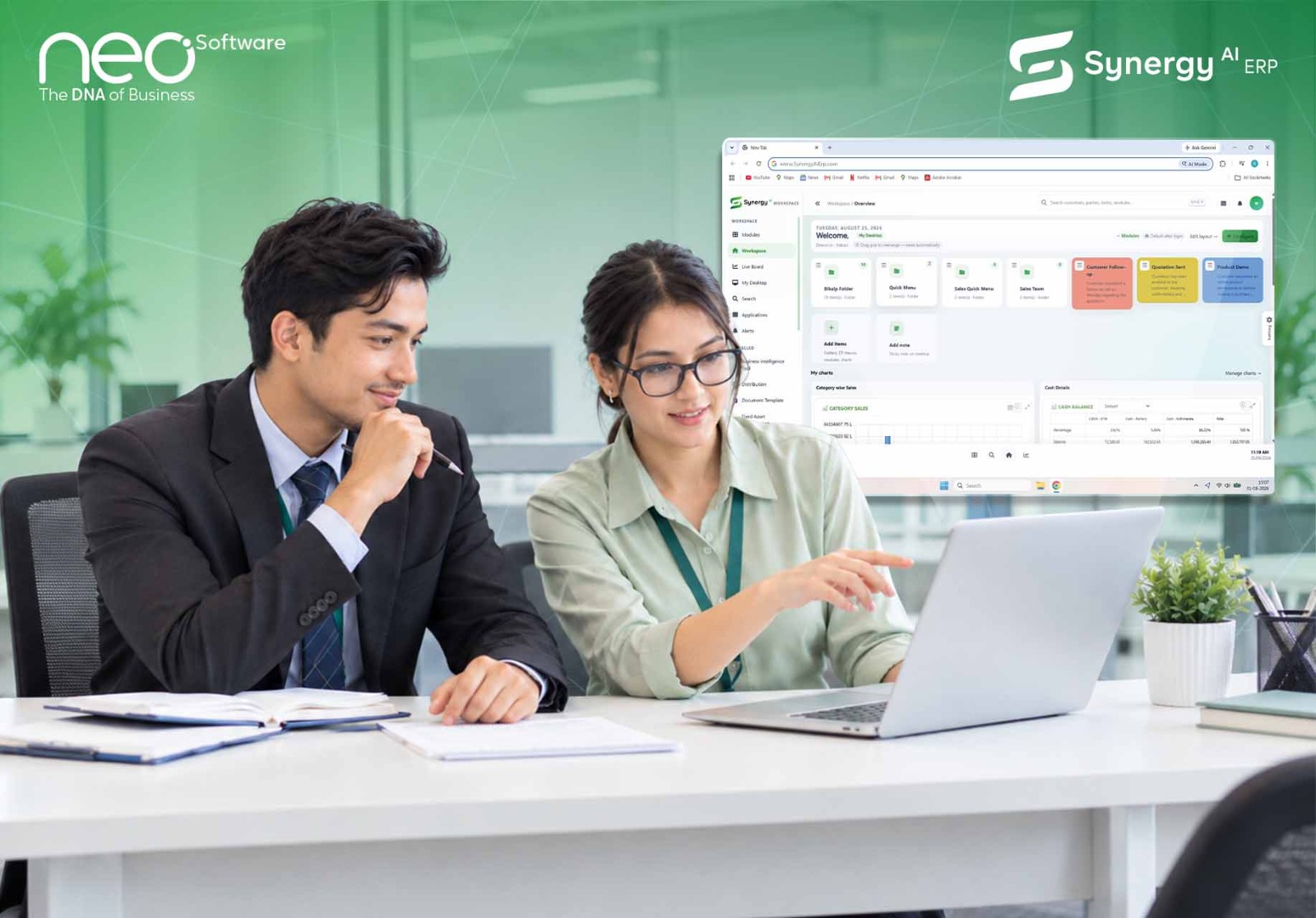
At Neo Software, we do both. We implement our own ERP product, Synergy, and we're also an authorised SAP Business One partner. That gives us flexibility to recommend what actually fits and the in-house expertise to implement it properly. We're upfront about this because we think the best consulting relationship starts with honesty about where the consultant's incentives lie.
What you should expect as deliverables
Before signing with any ERP consultant in Nepal, ask what you'll receive. At minimum, a good engagement should produce:
-
Process documentation: a written map of how your business will operate in the new system
-
Scope document: exactly which modules, users, branches, and integrations are included
-
Data migration plan: what data moves, what gets cleaned, and who's responsible
-
Implementation timeline: clear milestones with go-live date
-
Training plan: who gets trained, on what, and when
-
Post-go-live support terms: how long, how responsive, what's covered
If a consultant can't provide these upfront, that's a red flag.
Conclusion
The right ERP system can transform how a business operates, but successful implementation requires more than software. An experienced ERP consultant helps align processes, data, people, and technology.
For Nepali businesses, the right guidance can mean smoother implementation, stronger compliance, better visibility, and faster decisions. Ultimately, the goal is not just to install ERP, but to build a system that helps your business grow.
Ready for Better ERP Implementation?
See how one intelligent platform can bring your business processes, data, and teams together.
Book Your Demo of Synergy AI ERP
FAQS
When should I hire an ERP consultant?
When your business has complex processes, multiple branches, large amounts of data, or multiple departments using different systems.
How much does an ERP consultant cost in Nepal?
The cost depends on your business size, modules, users, customization, integrations, and implementation requirements.
Does an ERP consultant clean existing business data?
Yes. They identify duplicate, outdated, or incorrect data before it is transferred to the new ERP.
How does an ERP consultant help with Nepal's compliance requirements?
They configure relevant processes for requirements such as VAT, IRD reporting, and other applicable local business requirements.
Does an ERP consultant train employees?
Yes. They teach employees how to use the ERP and follow the new business workflows correctly.